
What Is a Wisconsin Condominium Executive Summary?
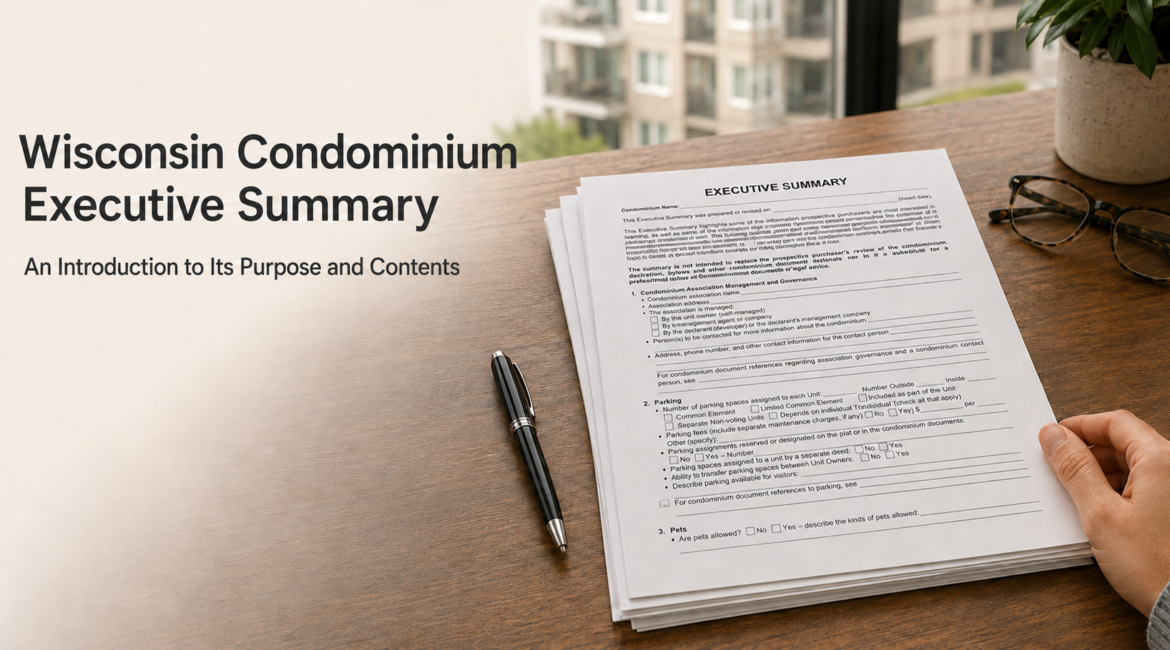
The Wisconsin Condominium Executive Summary is one component of the disclosure materials required for many residential condominiums in Wisconsin, subject to certain statutory exceptions.
Its purpose is to highlight information prospective buyers frequently want to understand. Depending upon how the summary was prepared, it may briefly address a subject or direct the reader to a particular document, section or page where additional information can be found.
The Executive Summary is best understood as an introduction or roadmap. It does not replace careful review of the declaration, bylaws, rules and other condominium disclosure materials. Wisconsin law specifically distinguishes the Executive Summary from the other required disclosure materials that may generally be relied upon as correct and binding. Review Wis. Stat. § 703.33
Information concerning a particular condominium should be determined from that condominium’s current disclosure materials. Buyers and sellers should consult an attorney or another appropriately qualified professional when they need legal advice, document interpretation or guidance concerning their particular circumstances.
General information only
This page provides general educational information about the Wisconsin Condominium Executive Summary. It is not legal advice, a legal interpretation of any condominium document or a substitute for reviewing the current disclosure materials for a particular condominium. Requirements and circumstances may vary.
What Information May Be Addressed?
Depending upon the condominium, the Executive Summary may provide information or direct readers to other condominium documents concerning subjects such as the following.
Everyday Use
- Parking
- Pets
- Unit rentals
- Amenities
- Unit alterations
Maintenance and Finances
- Unit-owner responsibilities
- Common and limited common elements
- Reserve funds
- Association assessments
- Certain association fees
Governance and Future Changes
- Association management
- Developer control
- Expansion rights
- Rights of first purchase
- Document amendments
These are examples of subjects addressed by the current model Executive Summary. They should not be interpreted as a complete list of matters that may be relevant to a particular condominium, association, or buyer.
Who prepares the document?
The condominium declarant, commonly called the developer, or the condominium association is responsible for preparing the Executive Summary and revising it when changes to the condominium materials require a corresponding update. It is not intended to be completed independently by a unit seller or real estate licensee.
Why the complete documents still matter
An Executive Summary can help make a large collection of condominium documents easier to approach. However, a shortened explanation cannot necessarily communicate every qualification, exception or detail contained in the governing documents. Buyers should review the complete materials and seek appropriate legal, financial or other professional guidance when questions extend beyond the services provided by a real estate licensee.
Small-condominium note
An Executive Summary may not be required for certain small condominiums containing no more than 12 residential units, depending upon elections made in the condominium declaration.